Feel the Sound: Digital Strategy for Barbican Immersive
The Brief
Feel the Sound is a multi-sensory immersive exhibition at the Barbican exploring how sound shapes emotions, memories, and physical sensations. Featuring 11 interactive installations from artists including Max Cooper, Evan Ifekoya, and Domestic Data Streamers, it runs across the Centre from the entrance on Silk Street to the underground car parks, before embarking on an international tour starting in Tokyo.
Working with Emma Scott and funded by Bloomberg, I was brought in to develop the digital strategy for the exhibition: how could digital content and experiences extend the show beyond the physical walls, build an engaged audience, and provide a model that could scale with the international tour?
This was a year-long engagement that moved from strategic discovery through concept development, user testing, and ultimately the delivery of a physical AR installation that became one of the exhibition's standout interactive experiences.
Discovery
The project began with a mini design sprint, a condensed workshop format I adapted to explore how a digital product and content strategy could be developed for the exhibition. Working in-person and remotely with the Barbican Immersive team, we worked through a structured process:
- Defining a long-term goal and sprint questions
- Mapping the end-to-end experience across discovery, always-on, during, and after-show touchpoints
- Reviewing existing audience insight and research
- Creating How Might We statements to frame opportunities
- Ideation and paper prototyping of potential approaches
The sprint surfaced a clear set of challenges: how to meet a real audience need (not just market at them), how to reach Gen Z audiences who weren't natural Barbican visitors, and how to create something that worked as both an acquisition channel and a retention driver.
Developing the Strategy
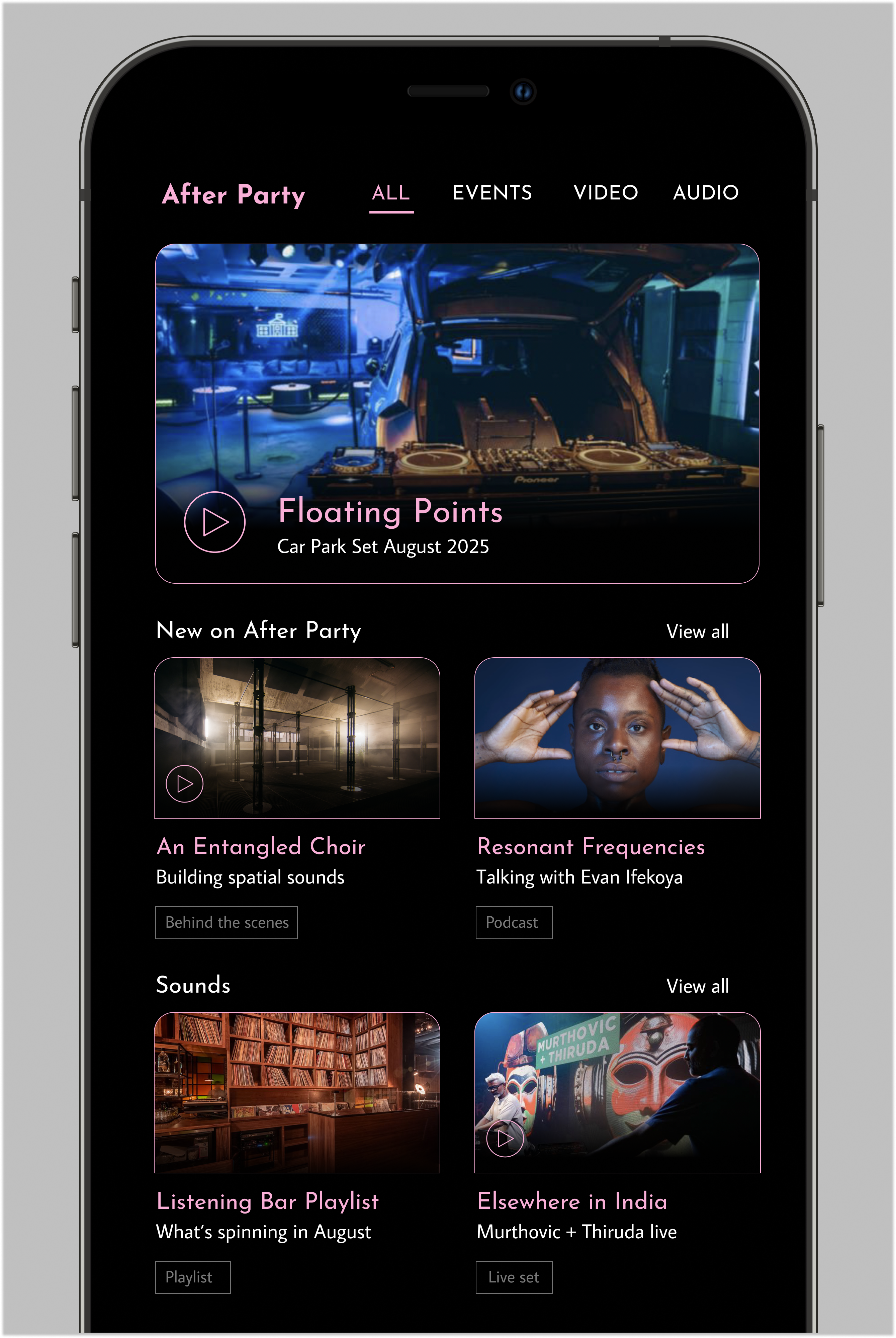
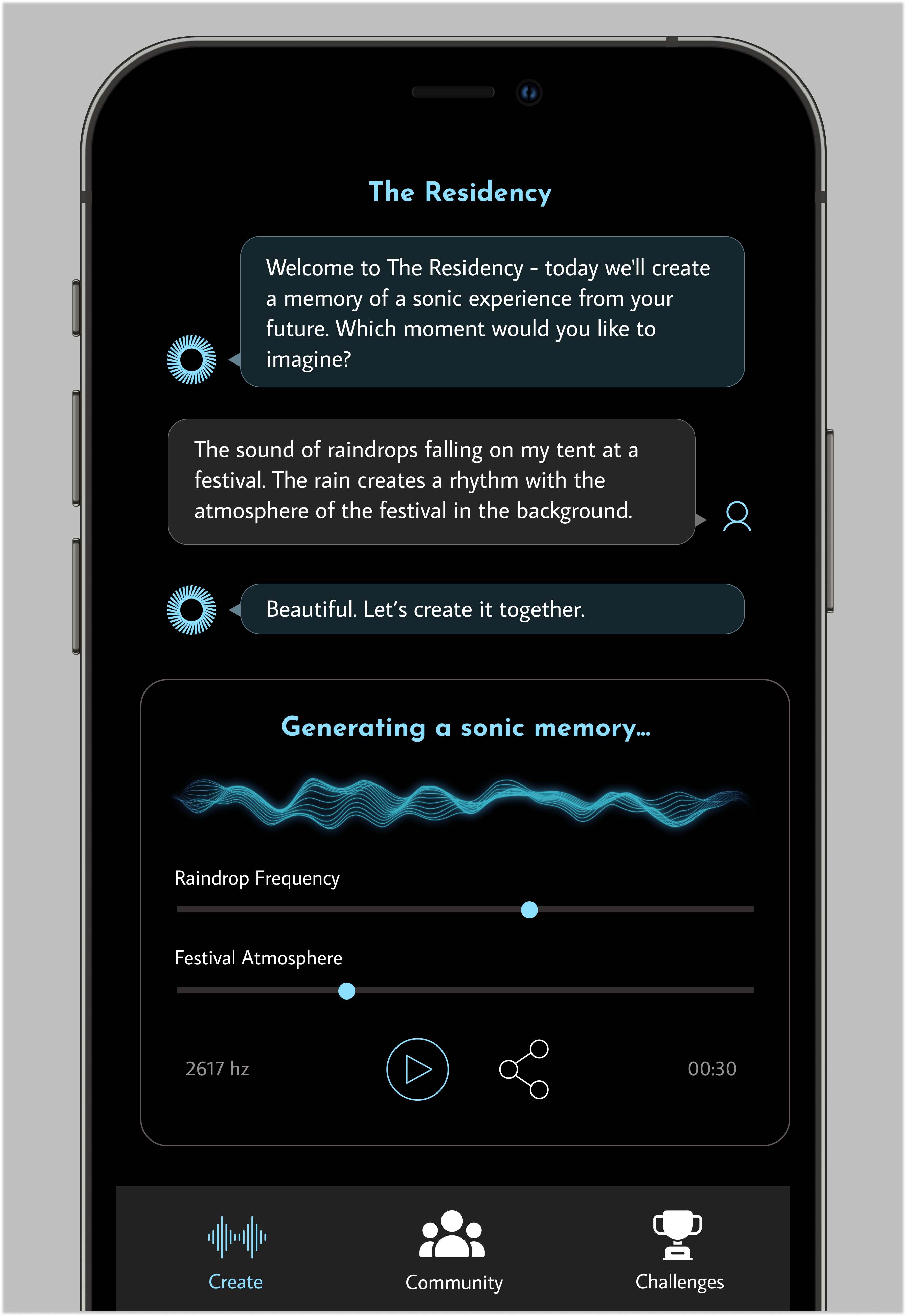
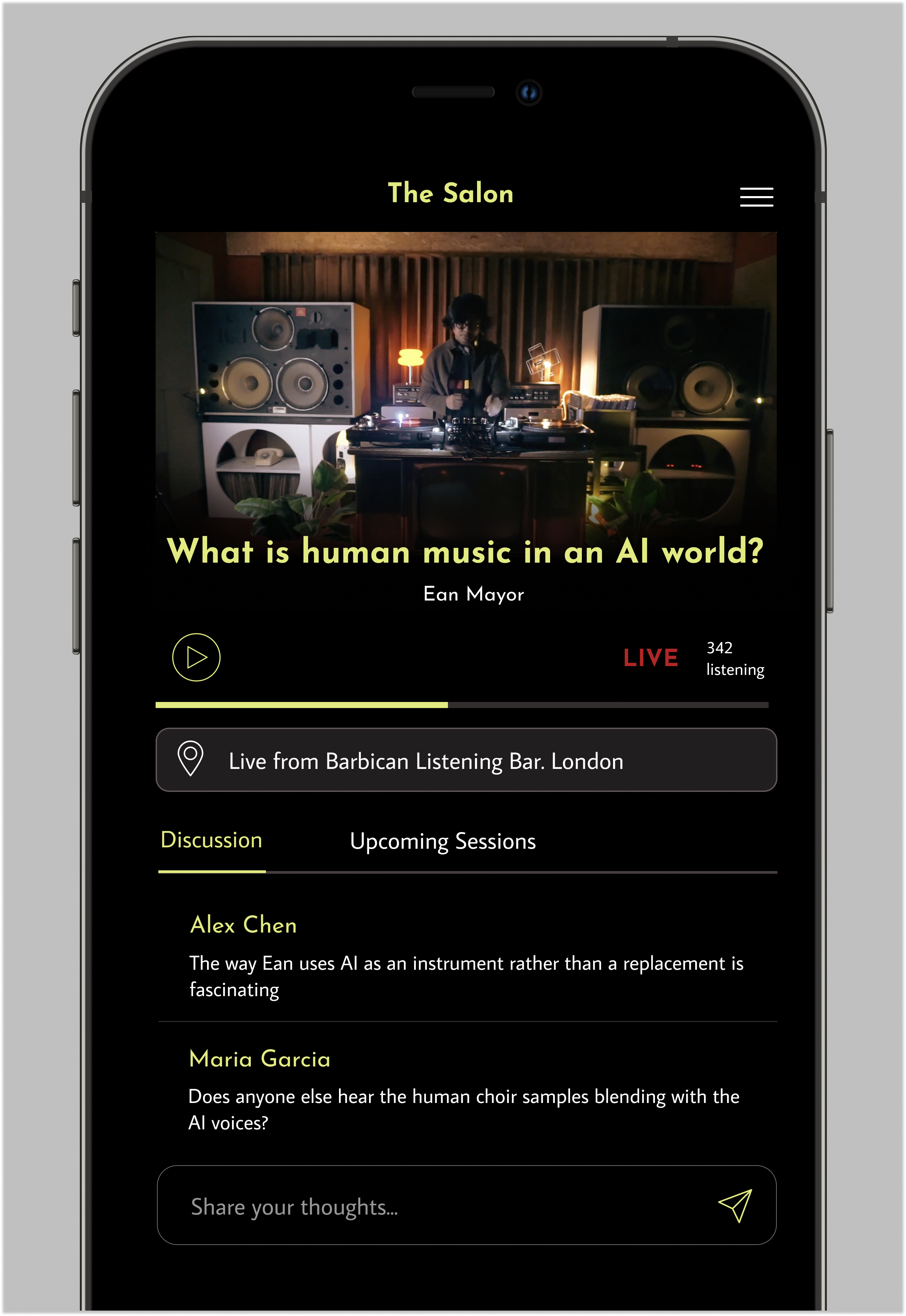
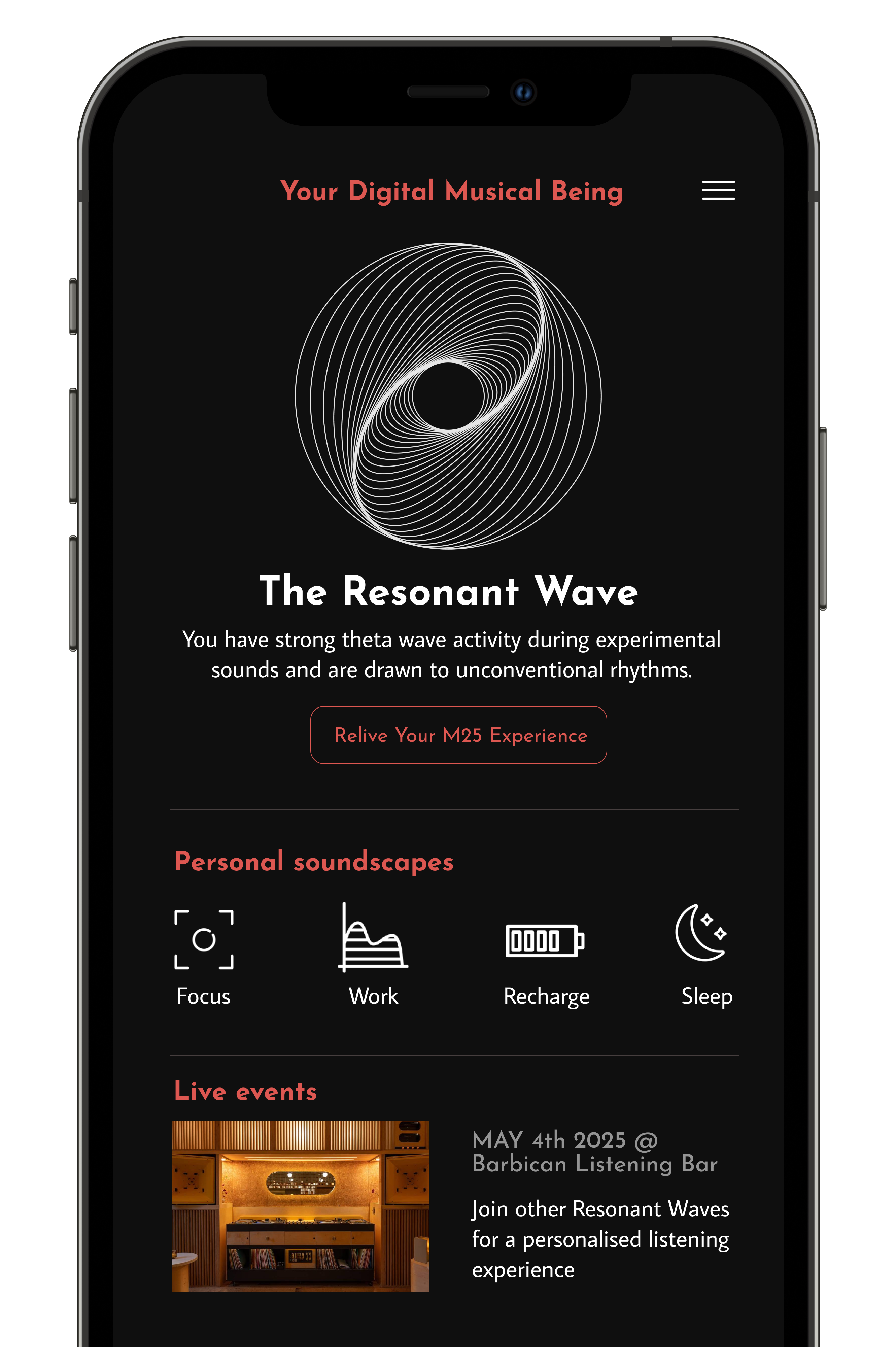
From the workshop output, I developed four distinct strategic routes, each mapped to different audience drivers and brand archetypes. Working with content strategist Erica McKoy, we researched comparable digital strategies from organisations like Cercle, Define Everything Future, 180 Strand, and Sofar Sounds to inform each approach.
Each route was developed with a concept overview, content strategy, reference case studies, and UI prototypes to make the ideas tangible for stakeholders.
Testing with Gen Z
To validate the strategic routes, I designed research materials for qualitative testing with a Gen Z trendspotter panel, run in partnership with Sonia Joao at OXY Insight. Each concept was presented with visual stimulus, feature breakdowns, and user journey scenarios, designed to provoke honest responses about what would actually change behaviour.
The testing surfaced a clear winner. Digital Musical Being resonated as a novel experience that tapped into self-categorisation and personal discovery through sound. But the panel also delivered a critical insight: there was too much friction in asking users to visit a bespoke platform. The digital strategy needed to meet the audience where they already were — social platforms like TikTok and Instagram.
Some ideas from the other routes (AI creative tools, behind-the-scenes content) also resonated and were folded into the broader marketing strategy, but the core concept was clear: build a social-first version of Digital Musical Being.
From Strategy to Installation
With the strategy validated, I developed the concept into a production brief for an AR experience that would bring Digital Musical Being to life. The initial thinking centred on a TikTok filter, but a key insight from our research shifted the approach: visitors to immersive exhibitions want to put their phones away and be present. Rather than fighting that instinct, we needed to create a physical moment compelling enough that people would naturally want to take their phone out again — to capture and share the experience.
Consultation with TikTok's creative team reinforced this direction: a physical AR installation would be significantly more impactful than a digital-only filter. The brief evolved into a two-part approach — a physical AR Mirror as the centrepiece experience within the exhibition, accompanied by a companion TikTok filter for digital reach.
I sourced and recruited FFFACE.ME, an award-winning AR agency based in Barcelona with experience building installations for L'Oreal, Mugler, Meta, and Porsche. Their Loook.ai AR Mirror platform was the perfect fit: a physical installation that could deliver the "discover your frequency" concept in a way that felt like a natural extension of the exhibition.
How It Works
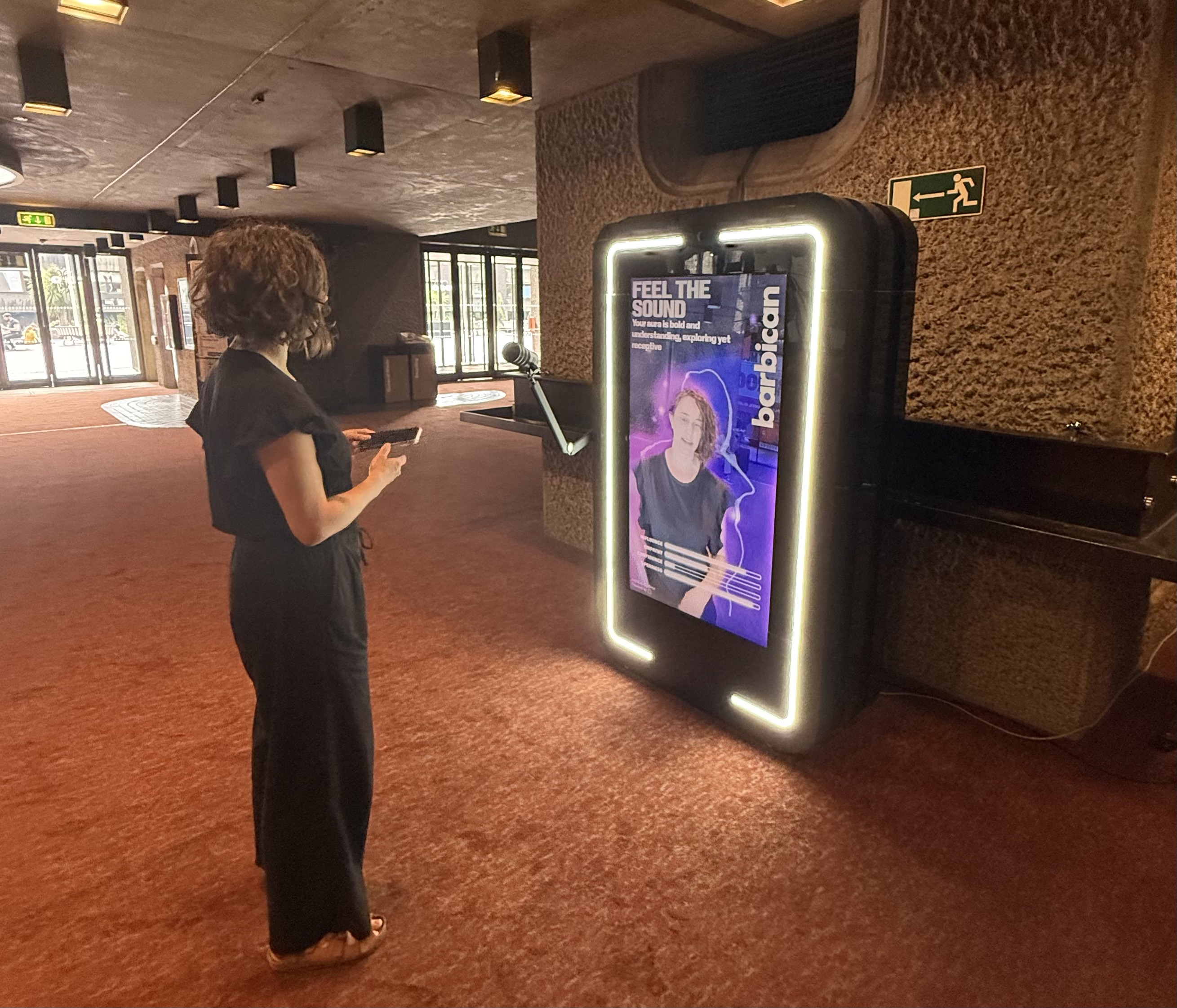
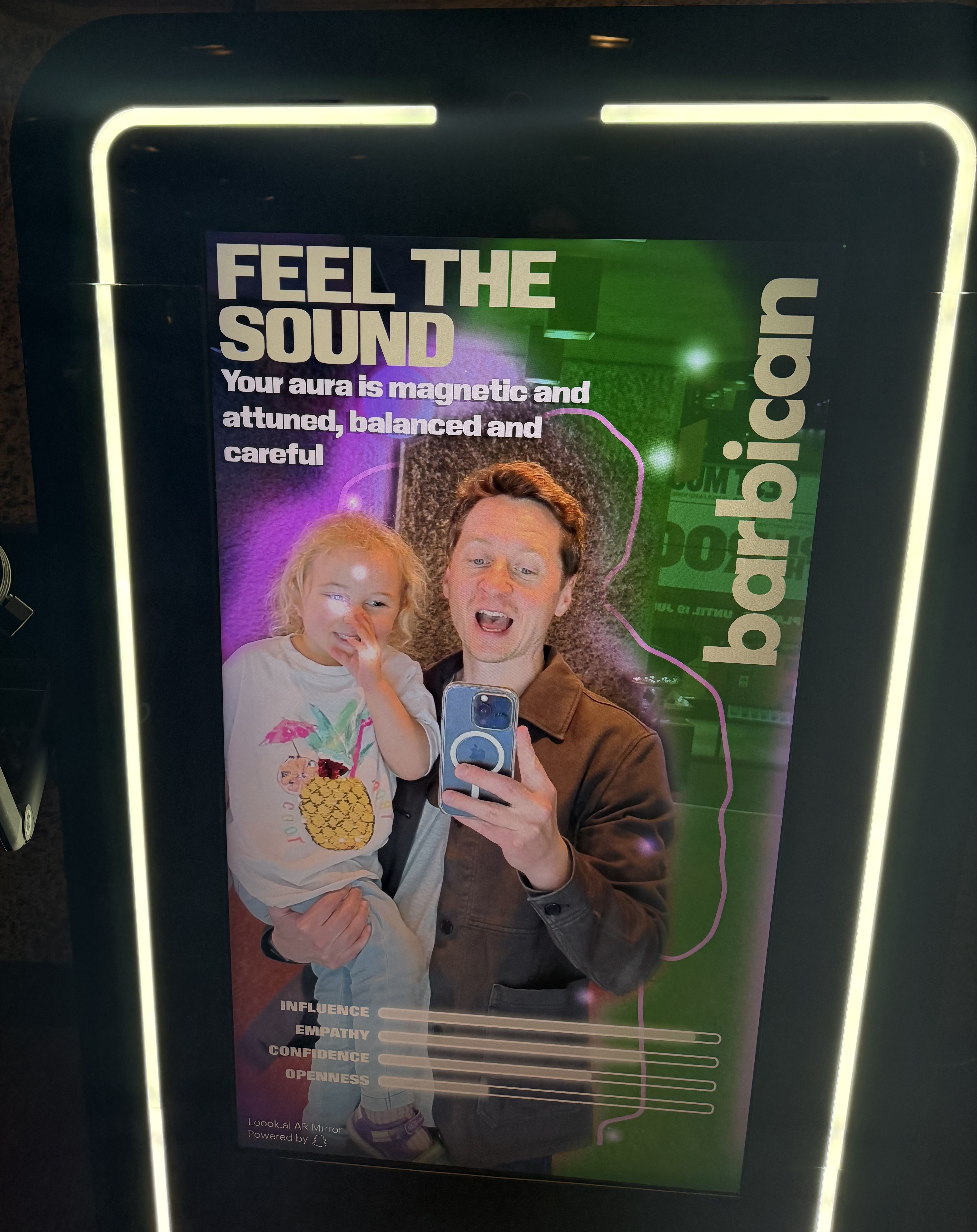
The AR Mirror uses facial recognition and audio-reactive effects to generate a personalised "aura" reading based on your voice, picked up by the installation. We suggested the prompt "I want to feel the sound" — though it worked with anything you said. Users see themselves on screen with dynamic visual overlays that reflect their sonic personality — traits like influence, empathy, confidence, and openness are mapped and displayed alongside a personalised description.
The result is inherently shareable: the screen itself was designed as a photo moment, and the majority of users photographed their reading without any prompting. The experience works across all ages and levels of tech comfort, from children to older visitors who'd never used an AR experience before.
Results
| Metric | Result |
|---|---|
| Exhibition Duration | 102 days (May – Aug 2025) |
| Estimated Total Users | 10,200 – 12,750 across the exhibition run |
| Peak Engagement | ~40 interactions per hour consistently |
| Audience | Strong engagement across all age groups and tech comfort levels |
| Sharing Behaviour | Popular via private messaging and WhatsApp |
| Agency Assessment | Rated in FFFACE.ME's top 10 AR mirror installations globally |
Reflections
This project was a good demonstration of the kind of work I enjoy most: taking a strategic brief from first principles through to a live, physical outcome. The arc from workshop post-its to a working installation in one of Europe's most prominent arts venues felt like a genuine proof point for the value of combining strategic thinking with hands-on design execution.
Process as a Product
The mini design sprint format worked well as a way to rapidly align a large stakeholder group around the right questions. Rather than arriving with a pre-formed strategy, the workshop approach meant the Barbican team had genuine ownership of the direction. The structured progression from sprint to concepts to testing to delivery gave everyone confidence that we were building on validated insight, not assumptions.
Meeting the Audience Where They Are
The Gen Z testing delivered a valuable lesson that applies far beyond this project: you can have the most innovative concept in the world, but if it requires people to change their behaviour (visit a new platform, download an app), the friction will kill it. The pivot from a bespoke digital platform to a physical in-venue experience was directly informed by this insight, and the engagement numbers validated it.
Physical Beats Digital (Sometimes)
Working with TikTok's creative team early on surfaced an important insight: for an exhibition about sound and sensation, a physical installation would always outperform a digital-only filter. People want to feel the technology, not just see it through a screen. The AR Mirror succeeded because it sat at the intersection of digital innovation and physical presence — exactly what the exhibition itself was about.
Strategy & Design
- James Nation— Digital Strategy & Design Lead
- Emma Scott— Project Director
- Erica McKoy— Content Strategy
Barbican Immersive
- Patrick Moran— Head of Commercial Strategy & Partnerships
- Luke Kemp— Head of Creative Programme
- Jackie Ellis— Head of Marketing
- Madeleine Coffey— Senior Digital Marketing Manager
- Isobel Parrish— Senior Marketing Manager
Research
- Sonia Joao— Qualitative Research Director, OXY Insight
AR Installation
- FFFACE.ME— AR Mirror Design & Development